
How to Search Criminal Dockets
Bailey County has no all-in-one criminal search. Begin with the court that owns the case. Felony records sit with the District Clerk for the 287th Judicial District Court. Class A and B misdemeanors belong to the constitutional County Court and County Clerk. Fine-only Class C cases may sit with the countywide Justice of the Peace or with Muleshoe Municipal Court. It depends on who issued the citation.
The County Clerk's LGS Online Records Search includes a Criminal record type. Guest access can display index details and image previews. Full images may require purchase or a subscription. For a district felony, call the District Clerk at 806-272-3165. Or visit Suite 130 at 300 South 1st Street in Muleshoe. A written request should name the court, party, cause number if known, date range, and the exact copy needed.
- Identify the offense level and issuing court.
- Use a cause number for the closest match.
- Choose Criminal in LGS for County Clerk material.
- Ask the District Clerk about felony files.
- Confirm settings and outcomes with the responsible clerk.
Bailey Criminal Courts by Level
Court level matters more than any first guess at a search. The 287th Judicial District Court serves Bailey and Parmer Counties and hears Bailey felony work. The constitutional County Court handles Class A and B misdemeanors, while the Justice of the Peace and Muleshoe Municipal Court hear fine-only matters within their authority. Juvenile cases follow separate access rules and are not part of an adult criminal search. The official 287th District Court page shows the district court and its contact route.
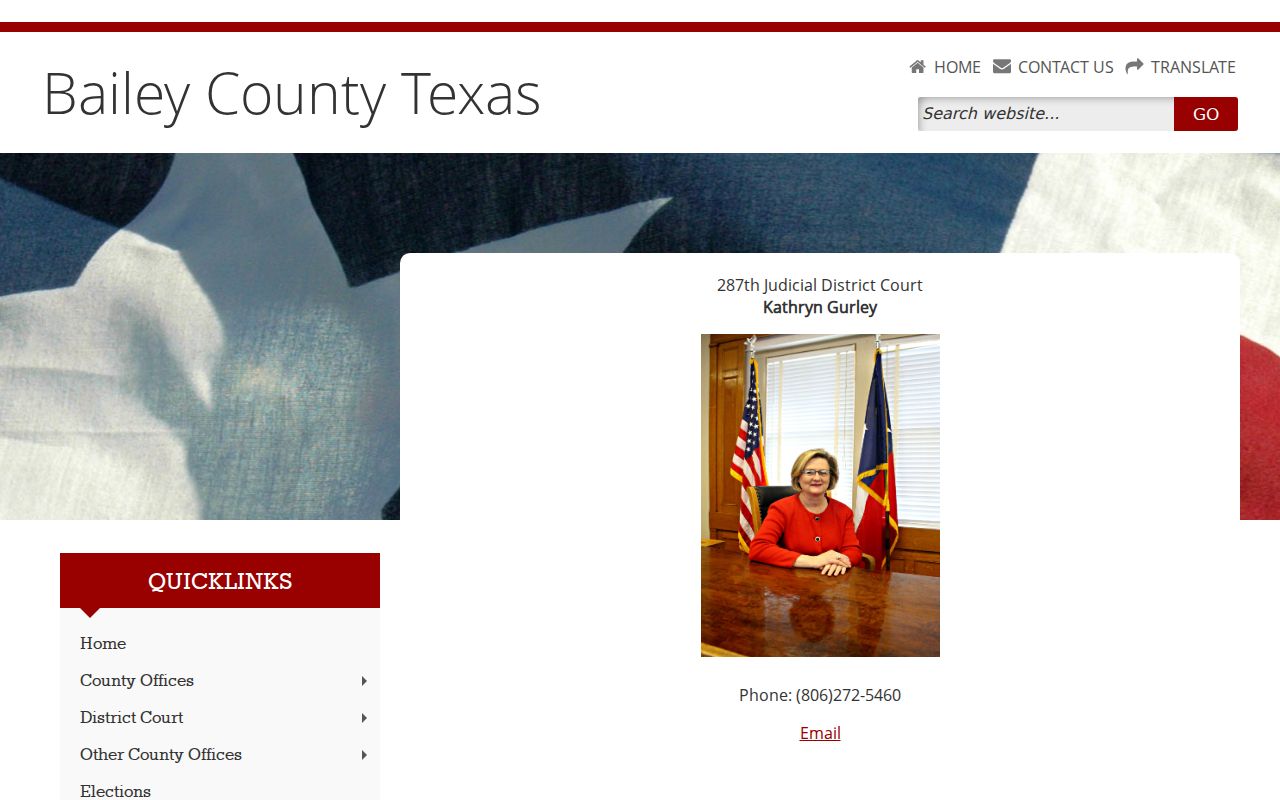
The court page helps separate the felony venue from county, justice, and municipal dockets.
What a Criminal Docket Shows
A Bailey County criminal docket is a dated sequence, and the exact fields vary by court. Check the cause number, court, case style, filing and entry dates, counsel, charge description if public, settings, motions, orders, bond entries, disposition, sentence, costs, and appeal references. An entry can identify an event without displaying the document behind it.
| Case identity | Cause number, court, and State v. defendant style. |
|---|---|
| Charge record | Indictment or information details when public and shown. |
| Events | Arraignment, motions, notices, settings, resets, plea, or trial. |
| Outcome | Judgment, sentence, dismissal, supervision, or appeal notation. |
| Documents | Links or index references, subject to access limits. |
Never treat an accusation or filing as a finding; read the final signed judgment when the outcome matters.
Bailey LGS and State Search
LGS and re:SearchTX serve different roles. LGS is the clearest published online route for County Clerk criminal index and image questions. The statewide portal can search cases, filings, text, and hearings where a court participates and the user's role allows access. Criminal coverage has exceptions, so a blank statewide result does not close the inquiry. The official re:SearchTX entry shows the statewide portal without opening a private case.
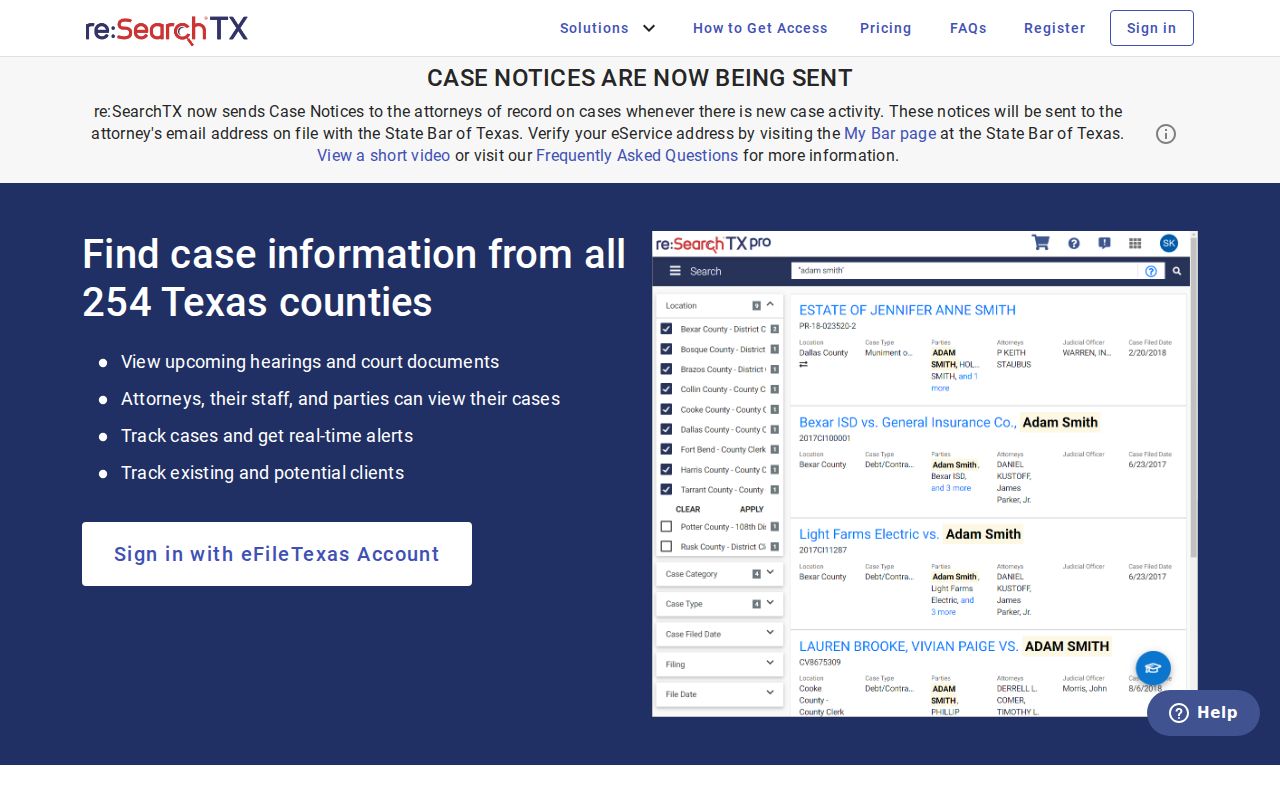
Filter by location and case type. If coverage, access, or court assignment stays unclear, go back to the Bailey clerk.
Stages on a Criminal Docket
A case does not always pass through every possible event. The register often follows a broad path. An indictment is a grand-jury charging instrument for a felony. An information is a prosecutor-filed instrument where permitted. Arraignment is the appearance where the charge and plea process are addressed. A motion simply asks the judge for an order.
A reset or continuance changes a setting without dismissing the case. Deferred adjudication is likewise distinct from erasure. When a short code appears, ask the clerk what it means rather than assuming common shorthand such as CONT or DISP is Bailey's official code.
Bailey Criminal Docket Workload
Local activity figures add scale, not a verdict. Texas Office of Court Administration data for fiscal 2025 cover Bailey Justice Court. It began with 1,139 active criminal cases. It reactivated 75, added 549, disposed of 563, and placed 73 inactive. It ended with 1,150 active cases. These are case-activity counts, not counts of distinct people or convictions.
The figures explain why a current cause number helps. Similar names can cause false matches, and status may change after the report closes.
Which Court Holds Criminal Dockets
Send a felony request to the District Clerk. That office keeps 287th District Court case files and certified district records. County misdemeanor questions go to the County Clerk and County Court. Direct a JP citation to the Justice of the Peace. A city citation goes to Muleshoe Municipal Court. The routes are not interchangeable. The Bailey District Clerk page provides the office contact and fee-report navigation.
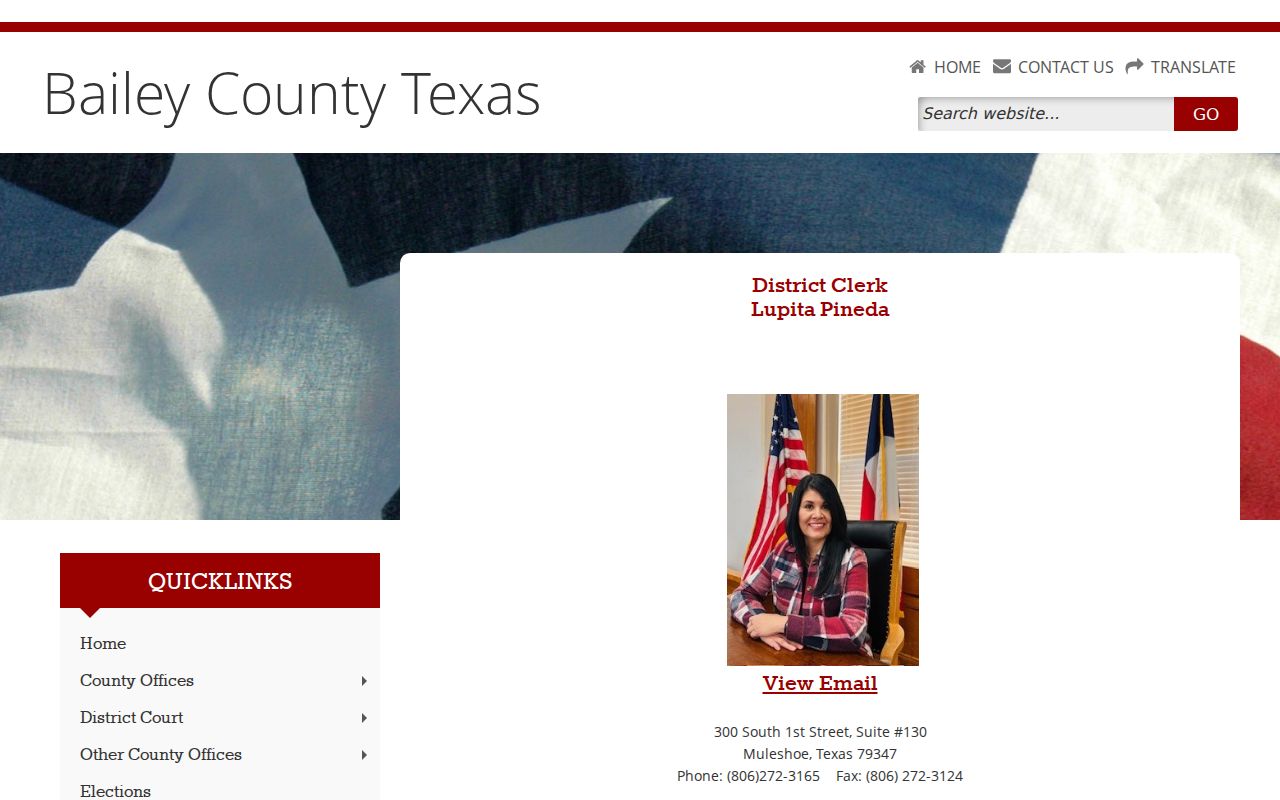
A fee report is an office record, not a criminal docket. Request the index, a plain copy, a certified judgment, or another named filing on its own.
Missing Bailey Felony Results
When a Bailey County docket search comes up empty, the cause is usually ordinary. The name may be misspelled. The file may not be indexed yet. An older case may still sit on film instead of in a digital record. Coverage statewide is spotty, too. Some records are simply restricted. Bailey budget papers mention microfilm, but they never say which criminal date ranges live there. So call instead of guessing.
Give the District Clerk the court, the party name, rough dates, and the cause number. Then ask a direct question. Is the file at the counter, on a public terminal, in an older medium, or with another clerk entirely? Bailey County has not confirmed any public courthouse docket terminal. Plan around county hours. They run Monday through Thursday, 8:00 a.m. to 5:00 p.m., plus Friday, 8:00 a.m. to 1:00 p.m.
A phone call or counter visit works well when a portal gives you nothing. A written or mailed request has its own value. It pins down exactly which court record you want and lets the clerk quote copy costs up front. Statewide re:SearchTX can serve as a second check. It applies only where the court and case type participate, and it is not a promise of complete felony coverage. One more question saves trouble. Will you get a free index, an ordinary copy, or a certified copy? Each product serves a different need, and each can carry a different charge.
Public Access and Sealed Criminal Dockets
Public access to a Bailey County criminal docket stops at certain doors. Juvenile records follow special rules under Texas Family Code chapter 58. Grand-jury material can stay closed. So can protected identifying data, medical information, and some investigation files, even after a public hearing. Sealed, dismissed, expunged, and acquitted each mean different things. Treat them as distinct outcomes rather than synonyms.
Access rule: A blank search is not proof that no Bailey County criminal docket exists. Ask the proper clerk whether the file is restricted, elsewhere, or not online.
Texas Family Code chapter 58 sets special access and sealing rules for juvenile records.
The local juvenile diversion PDF describes the program itself, not a public participant docket. A party or authorized lawyer should ask the court what identity, role, or order is required.
Bailey Bond and Warrant Entries
Bond, capias, and warrant entries on a Bailey County criminal docket always need current confirmation. A bond sets a release or financial condition. A capias or warrant directs arrest or detention. Yet an old entry may since have been recalled, served, replaced, or resolved. A stale screen tells you nothing reliable about present status.
Call the court listed on the entry. Ask for the current status and next setting, and skip any request for protected details. For formal use, get the signed order or a certified judgment. District Clerk fees under Government Code section 51.902 shift with search type, page count, format, and certification. Request a current total before you commit.